
The Old Animal-Bladder Story Behind Football’s Most Famous Nickname
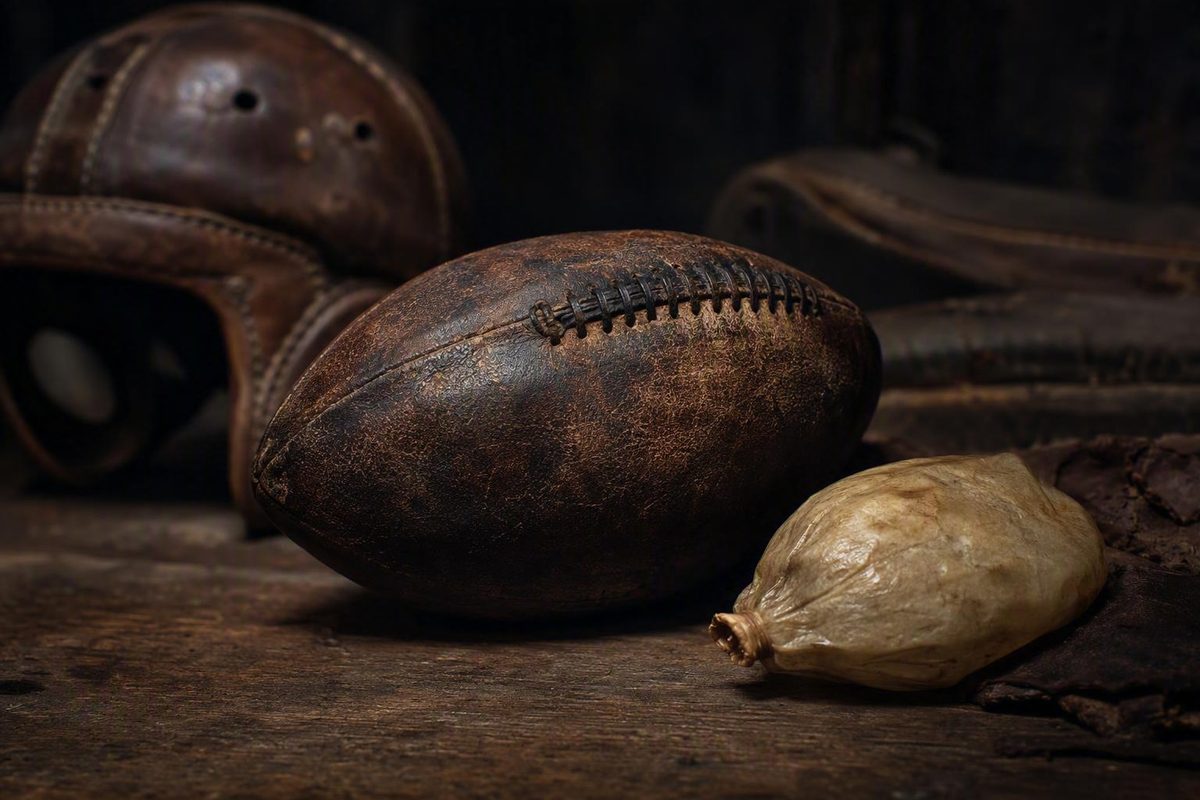
Some early football-like balls likely used inflated pig bladders as inner cores, though the nickname’s precise origin remains undocumented.
A football is probably called a “pigskin” because some early football-like balls used an inflated pig bladder as their inner core. That association likely produced the nickname, although the precise origin of the term has not been conclusively documented.
The short answer: “pigskin” probably referred to the bladder
The leading explanation concerns what was inside the ball, not necessarily what covered it. Pig bladders were among those used, but bladders from other animals could serve the same purpose.
That qualification is important. Early “football” encompassed different kicking and running games rather than one sport governed by a universal construction standard. It would therefore be too strong to claim that the first footballs—or all early footballs—used pig bladders.
The old construction method nevertheless offers a plausible path to the nickname. A pig bladder was an inflatable animal component closely associated with some early balls, and “pigskin” became a more durable name for the object. The term remained in football vocabulary after animal bladders gave way to rubber and, eventually, synthetic alternatives. A history published by a football manufacturer describes the use of pig and other animal bladders and the later transition to rubber.
The nickname, in other words, survived the material practice that probably inspired it.
Pig bladder and pig-skin cover are not the same claim
A bladder and a cover perform different functions. The bladder is the inflatable chamber that holds air and gives the ball volume. The cover is the tougher exterior shell that players kick, carry, throw and catch.
The better-supported explanation is that some early football-like balls used pig bladders internally. A competing story suggests that early balls had exterior covers made from tanned pig hide. That possibility has been repeated, but the available evidence does not establish it as the source of the nickname. The Smithsonian’s examination of the question treats the pig-bladder explanation as more likely than the pig-hide theory while acknowledging that the true origin may never be known.
| Common claim | What the evidence supports |
|---|---|
| Footballs were definitively wrapped in pig skin. | Tanned pig-hide covers have been suggested, but that explanation remains speculative and appears less likely. |
| Every early football contained pig material. | Some early football-like balls likely used pig bladders; other animal bladders were also used. |
| Historians know exactly why the nickname began. | The pig-bladder explanation is plausible, but the precise etymology remains uncertain. |
The distinction prevents a convenient nickname from becoming an overly broad historical claim. “Footballs were made from pigs” implies a uniform design that the evidence does not support. The narrower conclusion is more defensible: some early balls probably contained an inflatable pig bladder, and that practice may have supplied the traditional name.
What an NFL football is made from today
No—the documented current Wilson NFL game football is not a literal pigskin. Its exterior is made from cowhide, while its inflatable core is a synthetic urethane bladder, according to the Smithsonian account cited above.
| Construction stage | Outer cover | Inflatable core |
|---|---|---|
| Early football-like balls | Leather cover, where used | Animal bladder, including pig or other animals |
| Later construction | Leather cover | Rubber bladder |
| Current Wilson NFL game ball | Four cowhide panels | Synthetic air bladder |
The modern row is a verified example, not a statement about every football manufactured today.
Wilson’s documented process also shows why the bladder and cover should not be confused. For its NFL “The Duke” game ball, the company cuts four panels from cowhide and keeps each color-matched set together during production. Workers sew the panels into a shell inside-out, soften the shell and turn it right-side-out. An air bladder is then inserted before the ball is laced, molded and inspected, as detailed in Wilson’s NFL game-football manufacturing guide.
“Pigskin” is therefore best understood as a linguistic holdover from early animal-bladder balls, especially those made with pig bladders. It does not accurately describe the documented materials in a current Wilson NFL football, and the nickname’s exact historical origin remains unproven.