
Ray Lewis Leads the NFL’s Available Career Tackle Records
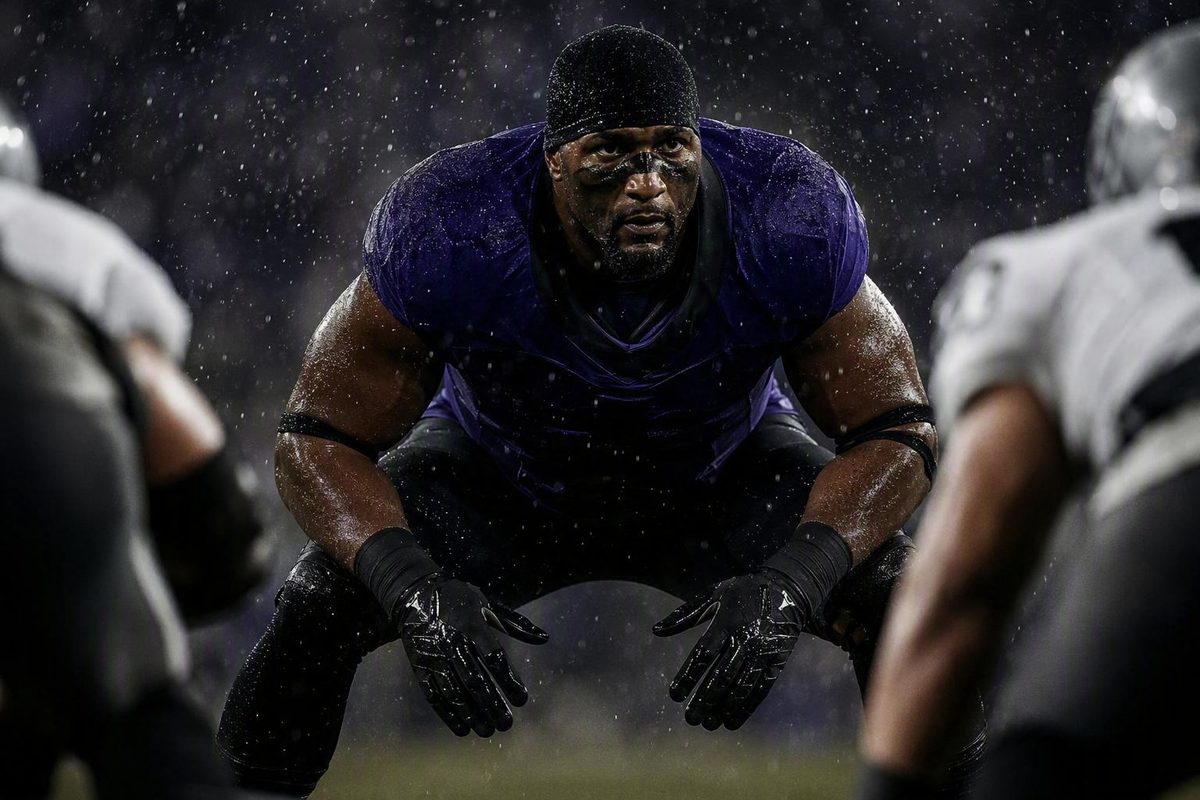
He leads available regular-season career data with 2,059 combined and 1,568 solo tackles, though incomplete early records limit all-era comparisons.
Ray Lewis leads the available recorded NFL regular-season career data with 2,059 combined tackles. He also leads the recorded solo-tackle category with 1,568. These totals identify the leader in the cited modern dataset, but incomplete records prevent a definitive comparison with every defender from every NFL era. The cited career rankings list Lewis first in both categories.
The short answer: Ray Lewis, with 2,059 combined tackles
Lewis ranks ahead of London Fletcher in both major career categories. Bobby Wagner is the active leader in the cited snapshot, although his figures have different cutoff dates: his combined total runs through Week 1 of the 2026 season, while his solo total runs through the 2025 season.
| Player | Combined tackles | Solo tackles | Status or data note |
|---|---|---|---|
| Ray Lewis | 2,059 | 1,568 | Recorded regular-season career leader in both categories |
| London Fletcher | 2,039 | 1,384 | Second in both cited rankings |
| Bobby Wagner | 2,000 | 1,150 | Active-leader snapshot; combined through Week 1 of 2026, solo through 2025 |
The table reflects the figures and update windows given by the cited career-tackles compilation. On that snapshot, Wagner’s 2,000 combined tackles put him 59 behind Lewis. Because Wagner was active at the stated cutoff, his total should be treated as a dated figure rather than a permanently current number.
These rankings measure accumulated statistical credit. They do not prove that Lewis was objectively the greatest tackler. The figures answer who leads the available record, not every possible question about tackling ability.
The distinction between regular-season and postseason statistics also matters. The totals above concern the regular-season career rankings used by the cited datasets; they should not be interpreted as career figures with playoff tackles added.
Combined tackles and solo tackles are different records
A solo tackle is credited when a defender is considered the primary player responsible for tackling the ball carrier. An assisted tackle assigns shared credit when multiple defenders participate in making the tackle. A player’s combined tackles equal solo tackles plus assisted tackles.
That is why Lewis has two record figures rather than one. His larger total is the combined-tackle record, incorporating both solo and assisted credit. His smaller total counts only solo tackles. Calling either figure simply “tackles” without naming the category can create confusion:
- “Combined tackles” includes solo and assisted tackles.
- “Solo tackles” includes only primary tackle credit.
- The two categories are related, but they are not interchangeable.
This distinction is particularly important when comparing players. A combined total captures more credited involvement, but it does not erase the difference between primary and shared credit.
Traditional tackle statistics are also judgments rather than measurements generated automatically from player movement. A scorekeeper must decide which defender receives a solo tackle, which players receive assists and whether a defender receives tackle credit at all. A peer-reviewed study describes these conventional counts as manually recorded, discrete and partly subjective, while confirming that combined tackles are the sum of solo and assisted tackles. The study proposes player-tracking measures as a more granular alternative.
Career and single-season records must likewise remain separate. A one-season leader has produced the highest credited total within a particular schedule, while a career leader has accumulated tackles across many seasons. The question “who has the most tackles in NFL history?” ordinarily asks for the career leader, so a single-season ranking would not answer it.
Why the all-time label needs an era warning
“All-time” can suggest a complete and standardized record extending to the NFL’s earliest seasons. Tackle statistics do not provide that uninterrupted historical comparison.
Available combined-tackle data extend to 1978, but the figures before 1987 are incomplete and cover only a limited number of earlier players. The available regular-season solo-tackle leaderboard begins in 1994. Those coverage limits mean many defenders from earlier decades cannot be compared with Lewis season by season on the same statistical basis.
The missing years create a fundamental limitation. An earlier defender may have physically participated in a vast number of tackles without leaving behind a complete record organized according to the categories used for modern players. It would therefore be too strong to say the evidence proves Lewis made more tackles than every defender who ever played professional football.
Scorekeeping introduces another layer of uncertainty. Conventional tackle credit is recorded by home-team scorekeepers, and the choice between a solo tackle, an assist or no credit can involve judgment. Statistical providers may consequently report different totals or organize historical data differently. The defensible point is not a categorical claim about the formal status of the statistic, but the supported reality that tackle counts are scorer-assigned and historically incomplete.
Researchers have explored tracking-based measures such as fractional tackles, which divide credit more precisely according to defenders’ contributions during a play. Such measures illustrate efforts to evaluate tackling beyond the traditional box score. They remain distinct from conventional career totals and should not be added to, or directly compared with, historical solo and combined-tackle counts.
The careful answer is therefore: Ray Lewis leads the available recorded NFL regular-season career tackle data, with 2,059 combined tackles and 1,568 solo tackles. Those figures establish his place at the top of the cited rankings, while gaps in early records prevent a perfectly comparable judgment across every NFL era.