
The 1985 Chicago Bears: How a 15–1 Season Became a Championship
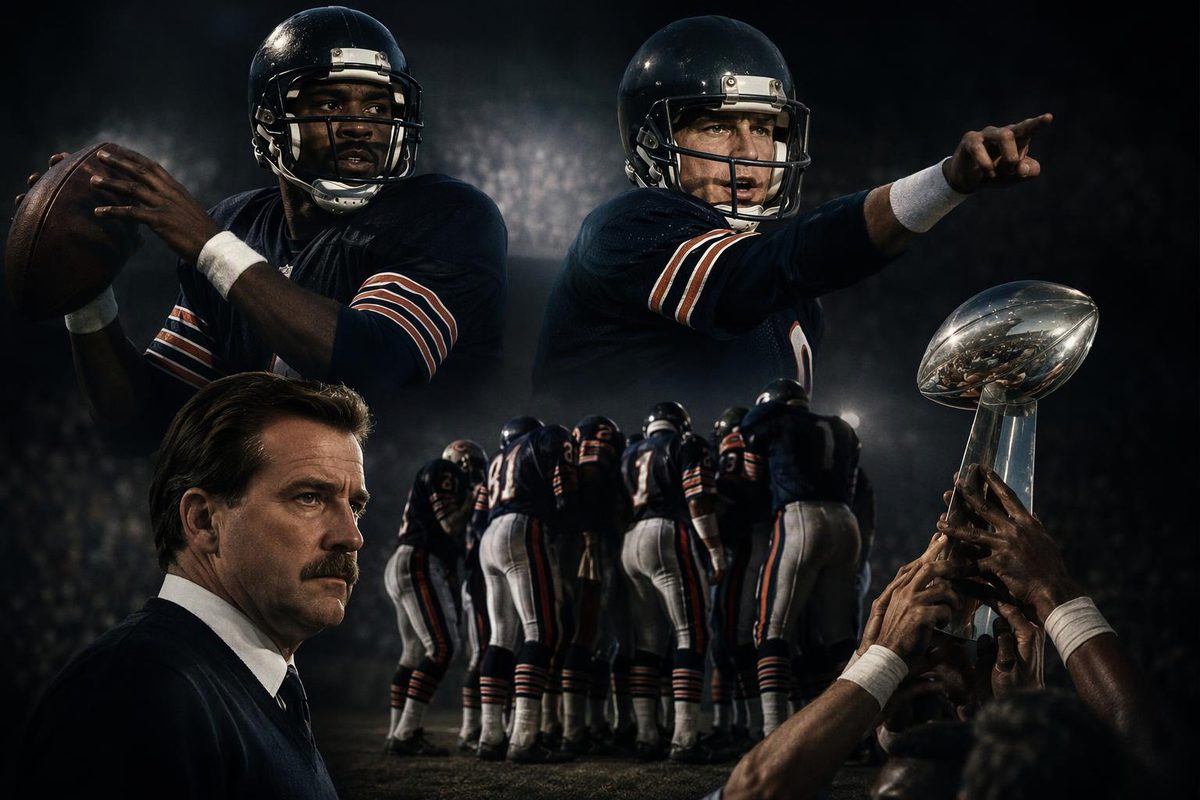
Follow the 1985 Chicago Bears from Payton and McMahon’s offense to a 15–1 regular season, the Miami loss and three playoff wins ending in Super Bowl XX.
Jim McMahon began one of the defining games of the Bears’ 1985 season on the bench. Back spasms had kept him out of practice, and he was also dealing with a leg infection. Steve Fuller started against Minnesota on September 19. With Chicago trailing 17–9 in the third quarter, McMahon entered and threw three touchdown passes in five minutes and 23 seconds. The Bears won 33–24. Their offense, not just their celebrated defense, could change a game in minutes. Kevin Lamb’s contemporary account captured that early glimpse of a championship team.
The 1985 Chicago Bears finished 15–1, won the NFC Central and went 3–0 in the playoffs, completing an 18–1 championship campaign. They scored 456 regular-season points, second in the NFL, and allowed a league-low 198. Their title came in Super Bowl XX on January 26, 1986—part of the 1985 season, despite the calendar date. Season record and statistics
The team Ditka took into 1985
Chicago entered the season with unfinished business. The previous campaign had ended in a 23–0 NFC Championship Game loss to San Francisco on January 6, 1985. Mike Ditka’s promise afterward—“We’ll be back”—gave the coming season a clear target. But the summer was unsettled: several players held out over contracts, and linebacker Al Harris and safety Todd Bell ultimately missed the season. Dan Pompei’s season diary, originally published January 3, 1986
Much of the championship roster was already in place. Seven starters had come from Chicago’s 1983 draft, including tackle Jimbo Covert, receiver Willie Gault, defensive end Richard Dent, safety Dave Duerson and guard Mark Bortz. The 1985 additions included first-round defensive tackle William “Refrigerator” Perry and fourth-round kicker Kevin Butler. Bears’ team history; 1985 draft and roster
Payton, McMahon and the offense
Walter Payton remained the offense’s foundation. In the 16-game regular season, he rushed for 1,551 yards and nine touchdowns, then added a team-high 49 receptions for 483 yards. Fullback Matt Suhey contributed 471 rushing yards and 33 catches. Regular-season player statistics
The line’s principal starters were Covert and Keith Van Horne at tackle, Bortz and Tom Thayer at guard, and Jay Hilgenberg at center. Offensive coordinator Ed Hughes had a team that led the NFL with 2,761 rushing yards. Chicago attempted 610 runs against 432 passes: this was a ground-oriented attack, but not one without receiving threats. Roster; team statistics and rankings
Gault led the Bears with 704 receiving yards and averaged 21.3 yards per catch. Dennis McKinnon caught seven touchdown passes, while tight end Emery Moorehead supplied 35 receptions. McMahon threw for 2,392 yards, 15 touchdowns and 11 interceptions, starting 11 games; Fuller started the other five. Injuries made the backup quarterback an important part of the season rather than a footnote. Player statistics
Ryan and the defensive roster
Buddy Ryan’s defense combined Dent, Dan Hampton and Steve McMichael up front with middle linebacker Mike Singletary and outside linebackers Otis Wilson and Wilber Marshall. Duerson and Gary Fencik played safety, with Leslie Frazier and Mike Richardson the principal starting cornerbacks. Perry and veteran defensive end Mike Hartenstine also made substantial contributions. 1985 roster
In the regular season, Chicago recorded 64 sacks and 54 takeaways, including 34 interceptions. Dent’s 17 sacks led the NFL. The Bears also ranked first in total yards allowed and rushing yards allowed. Team defensive totals; Dent’s Hall of Fame biography
Ryan’s famous “46” defense took its name from former Bears safety Doug Plank’s jersey number, not a count of linemen or linebackers. Plank had finished his Bears career in 1982. Bears’ account of the scheme’s name For how this unit compares with other great defenses, see our era-aware defensive comparison.
The regular season: comebacks, shutouts and one loss
The Bears did not dominate every game from kickoff. They trailed Tampa Bay 28–17 at halftime of the opener before winning 38–28. Frazier’s interception-return touchdown helped turn that game. McMahon’s relief appearance in Minnesota followed two weeks later, and Chicago needed another comeback in its October 6 visit to Tampa Bay. Contemporary season diary
On October 13, Chicago beat San Francisco 26–10 at Candlestick Park, reversing the previous postseason’s result. The Bears sacked Joe Montana seven times, and Payton rushed for 132 yards. Eight days later, Perry became a national attraction during a Monday-night win over Green Bay: he scored on a one-yard run and blocked for two more touchdowns. His regular-season offensive totals were small—two rushing touchdowns and one receiving touchdown—but his appearances became part of the team’s identity. Season diary; Perry’s statistics
By November, close calls had given way to emphatic victories. Chicago clinched the division by beating Dallas 44–0, then shut out Atlanta 36–0 to reach 12–0. Contemporary account
Complete 1985 regular-season results
Scores below list Chicago’s points first. All dates are in 1985. Source: Pro Football Archives’ season record.
| Week | Date | Opponent | Site | Result |
|---|---|---|---|---|
| 1 | Sept. 8 | Tampa Bay Buccaneers | Home | W 38–28 |
| 2 | Sept. 15 | New England Patriots | Home | W 20–7 |
| 3 | Sept. 19 | Minnesota Vikings | Away | W 33–24 |
| 4 | Sept. 29 | Washington Redskins | Home | W 45–10 |
| 5 | Oct. 6 | Tampa Bay Buccaneers | Away | W 27–19 |
| 6 | Oct. 13 | San Francisco 49ers | Away | W 26–10 |
| 7 | Oct. 21 | Green Bay Packers | Home | W 23–7 |
| 8 | Oct. 27 | Minnesota Vikings | Home | W 27–9 |
| 9 | Nov. 3 | Green Bay Packers | Away | W 16–10 |
| 10 | Nov. 10 | Detroit Lions | Home | W 24–3 |
| 11 | Nov. 17 | Dallas Cowboys | Away | W 44–0 |
| 12 | Nov. 24 | Atlanta Falcons | Home | W 36–0 |
| 13 | Dec. 2 | Miami Dolphins | Away | L 24–38 |
| 14 | Dec. 8 | Indianapolis Colts | Home | W 17–10 |
| 15 | Dec. 14 | New York Jets | Away | W 19–6 |
| 16 | Dec. 22 | Detroit Lions | Away | W 37–17 |
Why Miami mattered
The Dolphins ended Chicago’s unbeaten run on December 2 at the Orange Bowl. Dan Marino threw for 270 yards and three touchdowns in a 38–24 win. Miami game box score In later interviews, Don Shula and receiver Nat Moore described a plan built around quick throws and favorable matchups against Chicago’s pressure defense. Fuller started for the injured McMahon, who entered after Fuller hurt his ankle in the fourth quarter. FOX Sports’ retrospective with Shula and Moore
The defeat did not stop the team’s most famous off-field production. The Bears taped “The Super Bowl Shuffle” on December 3, hours after returning from Miami; Payton and McMahon filmed their portions later. The video was made before the championship was won, not as a celebration afterward. Chicago then won its last three regular-season games. Bears’ history of the recording; season results
January 1986: three wins to the title
Chicago opened the playoffs at Soldier Field on January 5 with a 21–0 win over the New York Giants. Shaun Gayle’s five-yard punt-return touchdown supplied the first score, and McMahon threw two third-quarter touchdown passes to McKinnon. The Giants managed only 32 rushing yards, while Phil Simms was sacked six times. Divisional-round box score
A week later, the Bears beat the Los Angeles Rams 24–0 for the NFC championship. Eric Dickerson gained just 46 yards on 17 carries. McMahon ran for a touchdown and passed for another; Marshall finished the scoring with a 52-yard fumble return. Chicago had reached the Super Bowl without conceding a postseason point. NFC Championship box score
Super Bowl XX brought a rematch with New England, which Chicago had beaten in Week 2. At the Louisiana Superdome on January 26, an early Payton fumble helped the Patriots take a 3–0 lead. The Bears answered with 44 consecutive points and won 46–10. McMahon rushed for two touchdowns, Suhey and Perry each ran for one, and the defense added an interception-return touchdown and a safety. Dent was named the game’s Most Valuable Player. Bears’ championship account; Hall of Fame account of Dent’s MVP performance
Across the three playoff games, Chicago outscored its opponents 91–10. McMahon finished the postseason with 636 passing yards, three touchdown passes and no interceptions. The defense supplied the shutouts and the pressure; the offense supplied enough big plays to turn a 15–1 regular season into a championship. Complete season and playoff statistics