
The NFL’s Biggest Blowout Was a Championship Game: Bears 73, Washington 0
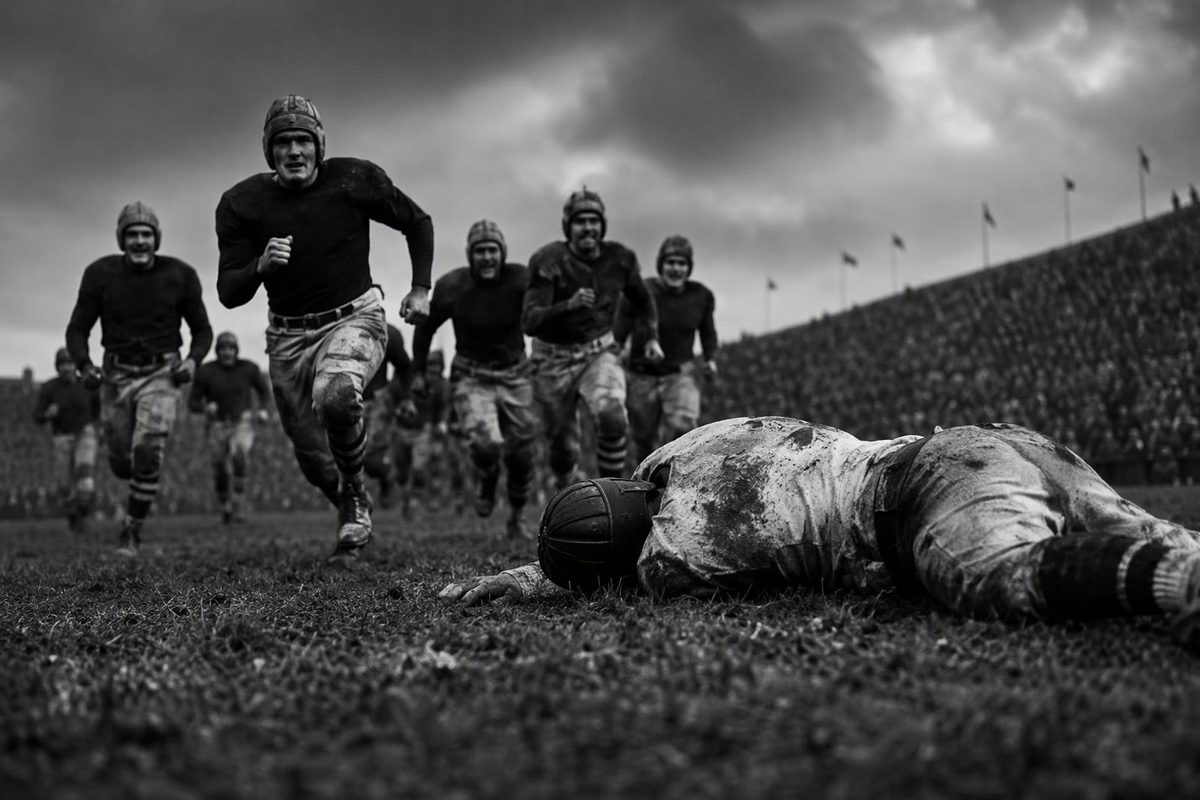
Chicago’s 73–0 win in the 1940 NFL Championship Game remains the biggest blowout. See how regular-season, post-merger and Super Bowl records differ.
The biggest blowout in NFL history is the Chicago Bears’ 73–0 victory over Washington in the NFL Championship Game on December 8, 1940. Played at Griffith Stadium in Washington, it produced a 73-point winning margin—the largest in either the regular season or playoffs. The Pro Football Hall of Fame identifies it as the league’s most decisive victory.
Chicago scored 11 touchdowns: seven on running plays, one on a pass and three on interception returns. This was not a contender overwhelming a last-place opponent: Washington had beaten the Bears on the same field just three weeks earlier. The Bears’ historical account emphasizes that the championship rematch remains the NFL’s most lopsided game.
The record depends on which games you count
“Biggest blowout” means largest final margin of victory, not the most points scored by one team or the largest lead during a game.
| Category | Record game | Date | Winning margin |
|---|---|---|---|
| All NFL games, including playoffs | Chicago Bears 73, Washington 0 | December 8, 1940 | 73 points |
| Regular season, between two NFL teams | Philadelphia Eagles 64, Cincinnati Reds 0 | November 6, 1934 | 64 points |
| Since the 1970 AFL–NFL merger | Los Angeles Rams 59, Atlanta Falcons 0; New England Patriots 59, Tennessee Titans 0 | December 4, 1976; October 18, 2009 | 59 points |
| Super Bowl | San Francisco 49ers 55, Denver Broncos 10 | January 28, 1990 | 45 points |
There is an early-league wrinkle in the regular-season category. Opta’s historical comparison includes Rochester’s 66–0 victory over Fort Porter in 1920, but Fort Porter was a non-league opponent. Philadelphia’s 64–0 win is the record when both teams must be league members.
The Cincinnati Reds in that game were a football franchise, not the baseball club or the modern Bengals. The Eagles’ archived 1934 line scores place the game at Temple Stadium in Philadelphia and show the Eagles scoring 26, six, 12 and 20 points across the four quarters.
How a 7–3 defeat became a 73–0 victory
On November 17, 1940, Washington beat Chicago 7–3 at Griffith Stadium. After Chicago complained about an uncalled pass-interference penalty on the final play, Washington owner George Preston Marshall disparaged the Bears as crybabies, quitters and frontrunners. According to the Bears’ historical account, coach George Halas used newspaper clippings of those comments to motivate his players before the championship rematch.
Chicago needed only its second offensive play to score. Fullback Bill Osmanski broke free for a 68-yard touchdown, helped by George Wilson’s block on two Washington defenders. The Bears led 21–0 after the first quarter and 28–0 at halftime.
The second half was even more destructive. Hampton Pool, George McAfee and Bulldog Turner each returned an interception for a third-quarter touchdown. Chicago added 26 points in that quarter and another 19 in the fourth.
The game’s statistical record shows how the margin grew:
- Chicago rushed for 381 yards and seven touchdowns; Washington managed five rushing yards.
- Washington threw eight interceptions and lost a fumble, giving Chicago nine takeaways.
- The Bears gained 519 total yards, compared with Washington’s 231.
Even the supply of footballs became part of the story. The Bears’ account says so many extra-point kicks went into the stands that officials asked Halas to use scrimmage plays after Chicago’s final two touchdowns because only one football remained. Those were one-point conversion attempts—not modern two-point tries. The scoring record shows a successful pass conversion taking Chicago from 66 to 67 points, followed by a failed pass attempt after its last touchdown.
Why the game mattered beyond the score
The 1940 contest was an NFL Championship Game, not a Super Bowl. It belongs to an earlier stage of how the NFL crowned its champions.
Its lasting influence was tactical as well as statistical. Halas’s Bears, assisted by Stanford coach Clark Shaughnessy, made the T-formation with a man in motion famous through this performance. The Hall of Fame’s chronology also identifies it as the first championship carried on network radio: Red Barber’s call reached 120 Mutual Broadcasting System stations. A national audience heard not merely a record defeat, but a demonstration of an offensive approach that the game helped popularize.